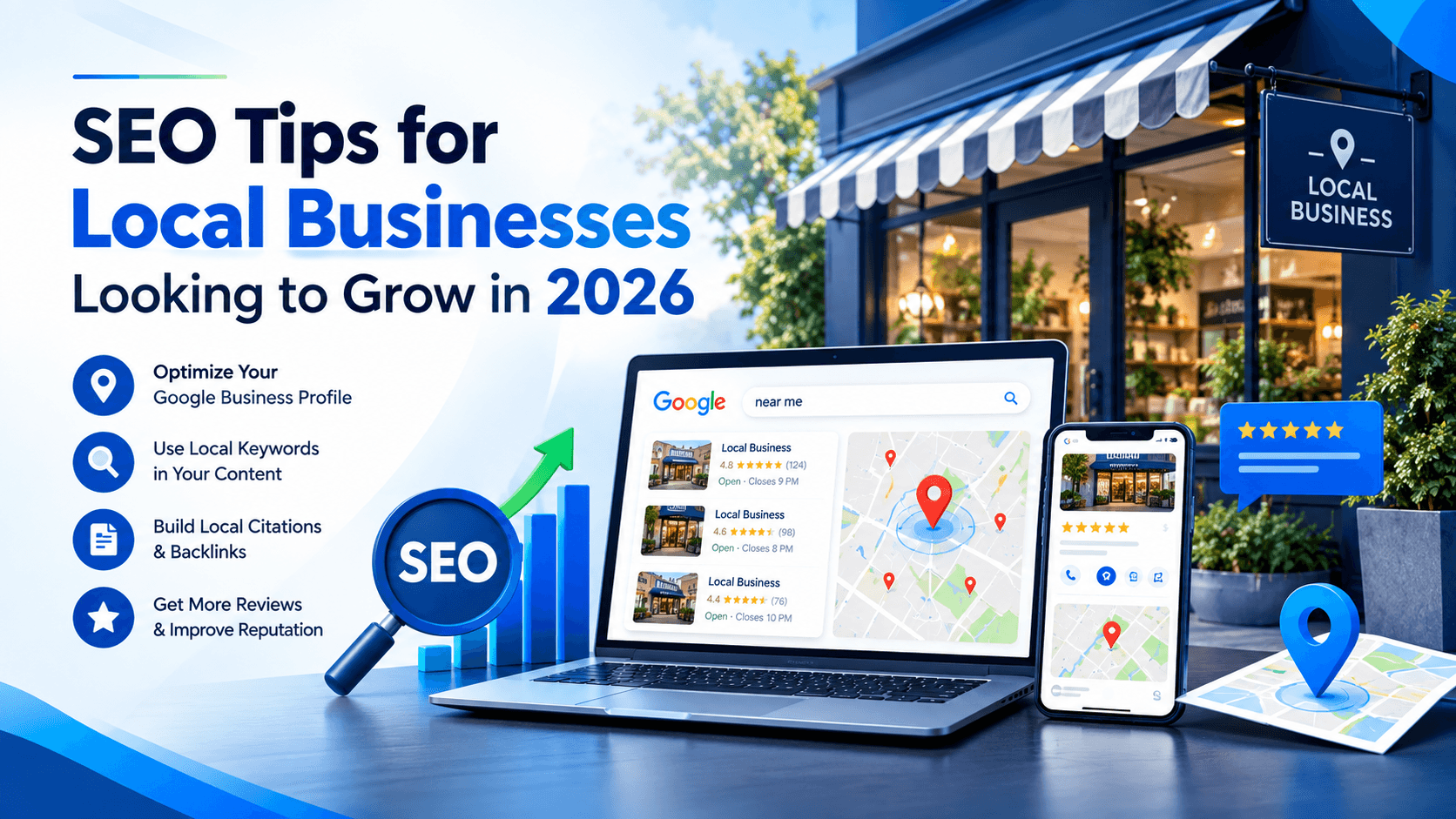
Most local businesses still treat SEO like a one-time setup task, a Google Business Profile filled out once in 2022 and forgotten. Meanwhile, competitors who update listings weekly and build location-specific content are quietly eating the map pack results.
The gap between a business stuck on page two and one dominating the local pack rankings usually isn't budget. It's a handful of overlooked fundamentals that compound over months. Here's the framework we use to move local clients into the top 3 map results heading into 2026.
Fix the Foundation Google Actually Trusts
Audit Your Google Business Profile Like It's a Landing Page
Google Business Profile optimization is the single highest-leverage lever for local visibility, yet most businesses treat it as a static directory listing. Categories, service areas, business hours, and photo freshness all directly influence map pack ranking.
A local clinic client had their primary category set incorrectly for over a year. After correcting it and adding 15 geo-tagged photos, map pack impressions rose by 52% within six weeks, with zero additional ad spend.
Kill NAP Inconsistencies Across the Web
Name, Address, and Phone number mismatches across directories confuse Google's local algorithm more than almost anything else. Pull a citation audit across the top 20 directories, fix every inconsistency, and resubmit.
Check Justdial, IndiaMART, and Google's own duplicate listings first
Standardize the exact same NAP format everywhere, down to abbreviations
Remove or merge duplicate listings that split your review signals
One retail client had three duplicate Google listings splitting their reviews across 40, 28, and 12 ratings. Consolidating into one profile pushed them from position 7 to position 2 for their core local keyword within a month.
Build Location-Specific Content, Not Generic Pages
Create a Dedicated Page for Every Service Area
A single "About Us" page trying to rank for five different neighborhoods almost never works as part of a real local business SEO strategy. Google increasingly rewards pages built around specific, narrow intent, "plumber in Malviya Nagar" performs very differently from a generic citywide services page.
Clients who built even three dedicated area pages with unique content, not duplicated templates, saw organic local traffic increase by 38% on average within 90 days.
Use Local Proof, Not Just Local Keywords
Stuffing a city name into a page title isn't enough anymore. Google's local ranking factors increasingly weigh genuine local signals, customer reviews mentioning the area, local backlinks, and community involvement content.
Embed a handful of recent reviews that mention the neighborhood by name
Link out to local business associations or community events you've sponsored
Add a short case study or testimonial specific to that service area
Reviews Are a Ranking Factor, Not Just Social Proof
Build a Systematic Review Request Process
Businesses that request reviews consistently, rather than sporadically after a good interaction, see steadier ranking movement as part of any solid online reputation management effort. Set up an automated request 24 hours after service completion, with a direct link removing as much friction as possible.
A home-services client went from 3 reviews a month to 22 a month simply by automating the ask. Within four months, they moved into the top 3 for their primary local search term.
Respond to Every Review, Good or Bad
Google's algorithm reads response activity as a signal of an active, trustworthy business. A thoughtful reply to a negative review, addressing the issue directly, often does more for local trust signals than another five-star review sitting unanswered.
Technical Basics That Still Decide Local Rankings
Mobile Speed Is Non-Negotiable for Local Search
The overwhelming majority of local searches, "near me" especially, happen on mobile with immediate intent, which is why mobile site speed optimization deserves the same attention as content and citations. A page that takes more than 3 seconds to load on mobile loses a significant share of that traffic before it even converts.
Schema Markup for Local Business Details
Structured data helps Google understand your business hours, address, and service area with more confidence than plain text alone. It's a small technical addition that consistently correlates with stronger map pack visibility for clients we've audited.
Scale With the Right Local SEO Partner
Local SEO in 2026 rewards consistency far more than any single trick. Businesses that treat their Google Business Profile, citations, and location content as living assets, updated monthly rather than set once, are the ones pulling ahead in the map pack.
If you're managing this alone and it feels like too many moving pieces to track consistently, the team at growthservice runs local SEO as an ongoing system rather than a one-time project, covering citations, review workflows, and location page content together.
For businesses that want a full audit before committing budget, growthservice also offers a starting point to see exactly where your current local presence is leaking visibility before building out the next 90-day plan.
Strategic Takeaway
Local SEO in 2026 isn't about chasing algorithm hacks. It's about consistency across the profile, the citations, the content, and the reviews that Google already trusts as ranking signals. Fix the foundation first, build genuinely local content instead of templated pages, and treat reviews as an ongoing process rather than an afterthought. That's the combination that actually moves a business into the top 3 and keeps it there.