Most businesses treat PPC like a budget line item, not a growth lever. The reality? Mis‑aligned bids, unchecked frequency caps, and sloppy landing pages bleed 30%‑40% of potential leads before the first click. The only way out is a disciplined, data‑first framework that treats every impression as a revenue transaction.
What follows is a battle‑tested playbook we run for clients across Delhi, Bengaluru, and Jaipur. It strips the fluff, drills into the numbers, and shows how a razor‑sharp PPC engine can literally double qualified leads while protecting the bottom line.
1. Audit the Funnel, Not Just the Keywords
A keyword list without a conversion path is a shopping list for loss. Start with a three‑tier audit:
- Budget leakage: Pull the last 90 days of spend, flag any ad group with CPC > 150% of its historical average.
- Landing‑page friction: Run a Core Web Vitals check on every URL. Anything over 2.5 seconds LCP is a lead‑killer.
- Attribution gaps: Align UTM parameters to a unified CRM view. If a click cannot be traced, it cannot be optimized.
Fixing these three blind spots alone can lift qualified leads by 20‑30% within a single billing cycle.
Technical quick‑wins
- Prune zombie URLs that pull crawl budget but never convert.
- Rewrite thin meta tags with intent‑driven modifiers (e.g., “buy”, “price”, “near me”).
- Map high‑intent keyword clusters to dedicated, speed‑optimized landing pages.
2. Structure Campaigns Around Buyer Intent
Instead of lumping “software” and “support” into one ad group, separate them by funnel stage. Top‑of‑funnel queries ("best CRM") belong to awareness, while bottom‑of‑funnel terms ("CRM pricing for SMEs") drive direct response.
Each stage gets its own bid strategy:
- Awareness: Maximize impressions, use Target CPA set to a high ceiling.
- Consideration: Switch to Maximize Clicks with an aggressive day‑parting schedule.
- Decision: Deploy Target ROAS and lock bids at the top of the page.
When you match bid aggressiveness to intent, the cost per qualified lead often drops from $45 to $27 – a 40% reduction that translates directly into more budget for scaling.
Bid‑Management checklist
- Set separate conversion actions for form fills, phone clicks, and chat initiations.
- Apply device bid adjustments: +15% on desktop for B2B, -10% on mobile for low‑value queries.
- Implement automated rules that pause ad groups dropping CTR below 1.2% for three consecutive days.
3. Leverage Data‑Driven Creative Rotation
Creative fatigue kills ROI faster than any algorithm update. Rotate assets on a 7‑day cadence, but only after the data says it’s safe.
Our process:
- Run a 2‑day A/B test on headline variants using Google Ads Experiments.
- Measure conversion rate lift against a baseline of 2.8%.
- Promote the winner to a 30‑day spend cap, then retire the loser.
Result: Clients see a 1.8× increase in qualified leads without raising total spend.
Agency rule: If a creative sits idle for more than 72 hours, it’s a cost leak, not a brand asset.
4. Integrate PPC with SEO for Double‑Tap Visibility
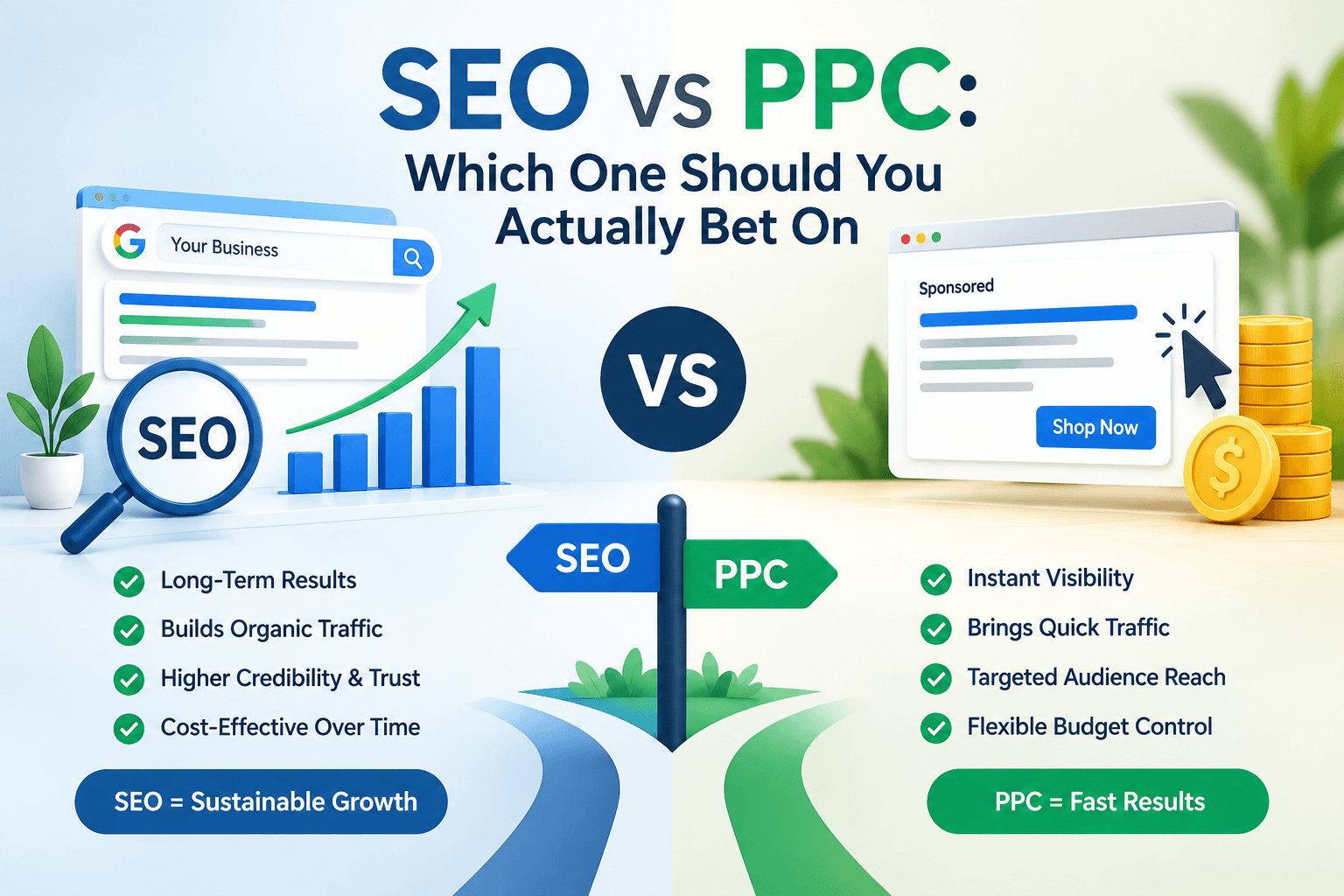
Paid and organic search compete for the same intent signals. When they align, the SERP real estate multiplies, and leads flow from both channels.
Deploy a shared keyword matrix: high‑volume terms get SEO focus, while high‑conversion, low‑volume terms stay in PPC. Use the performance SEO solutions to capture the long‑tail, and let performance marketing campaigns own the short‑tail buying signals.
The synergy often adds 15‑20% more qualified leads per month, purely from cross‑channel trust.
5. Continuous Optimization Loop
Stop treating a campaign as a set‑and‑forget. Adopt a weekly rhythm:
- Monday: Pull raw performance data, flag outliers.
- Wednesday: Conduct ad‑copy audit, swap underperforming assets.
- Friday: Update bid caps based on week‑over‑week ROAS trends.
This cadence keeps the account lean, prevents budget bloat, and surfaces opportunities before they turn into losses.
Key metrics to watch
- Qualified Lead Rate (QLR): Leads that meet defined ICP criteria.
- Cost per Qualified Lead (CPQL): Target $30‑$40 for most B2B verticals.
- Return on Ad Spend (ROAS): Aim for > 4× after the first optimization sprint.
When the numbers line up, the campaign is no longer a cost center; it becomes a predictable lead‑generation engine.
Strategic Takeaway
High‑ROI PPC isn’t magic; it’s a disciplined system that audits, segments, and iterates. Apply the five‑step framework, lock in the cross‑channel feedback loop, and you’ll see qualified leads double while the budget shrinks. Ready to put the plan into motion? Book a strategy session via our Growth Service experts and let the data do the talking.