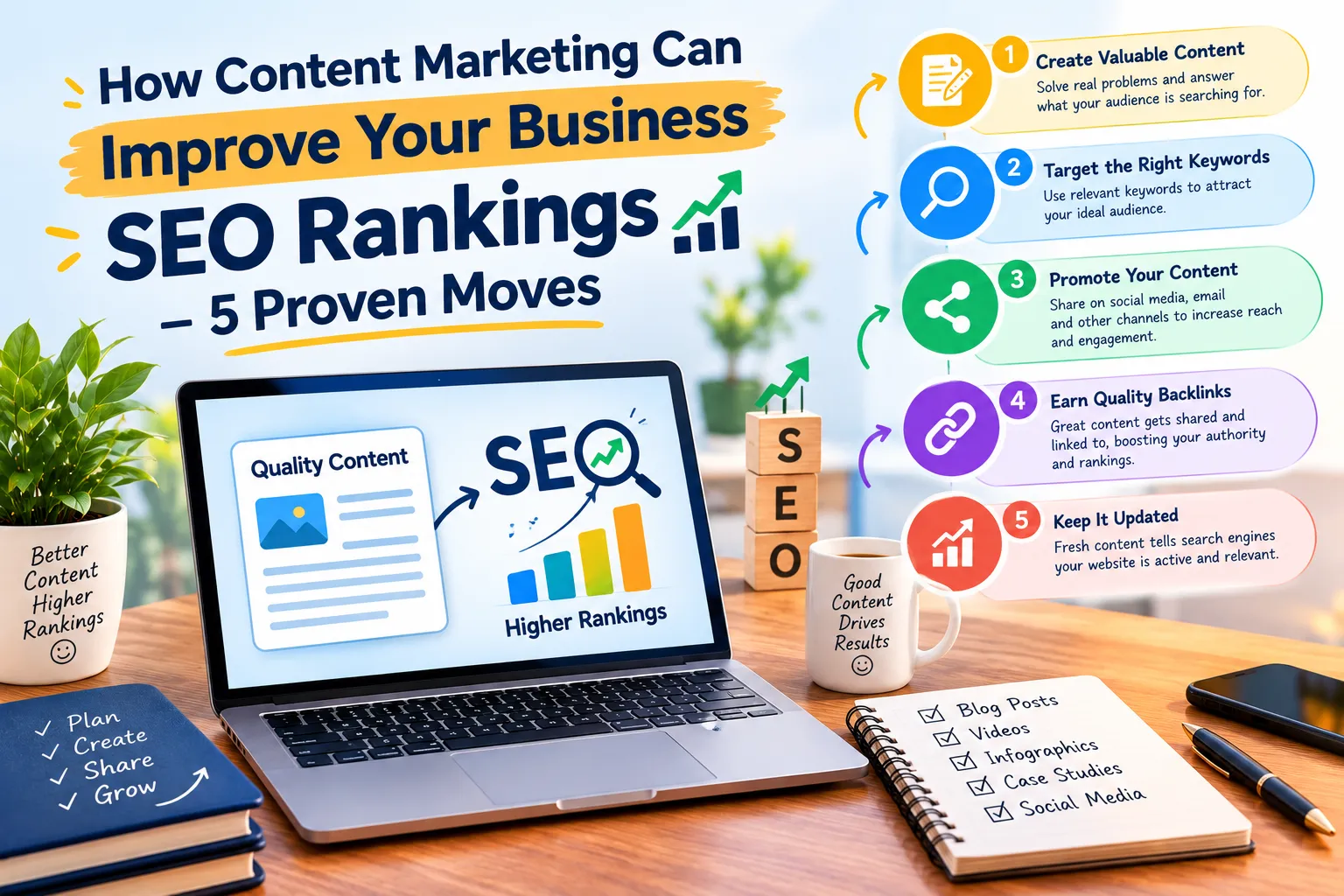
Most businesses think content is just a brand billboard. It isn’t. Poorly aligned copy drags your rankings down faster than a broken backlink. The upside? A targeted content engine can flip your SEO curve in weeks.
At Growth Service we’ve watched a mid‑size SaaS client double their organic leads after a single tweak to their pillar strategy. That’s the kind of ROI you need to chase.
Why content matters more than backlinks in 2024
Backlinks still matter, but Google’s algorithm now rewards depth over quantity. A single, well‑structured article that answers a buyer’s exact question can outrank ten low‑quality links. The mechanism is semantic relevance—the engine matches intent, not just keyword strings.
Our performance SEO solutions always start with a content audit before any link outreach. If the page doesn’t satisfy the user intent, the links won’t stick.
How content marketing can improve your business SEO rankings: a 40‑word answer
By creating in‑depth, keyword‑clustered assets that answer specific queries, you signal authority, increase dwell time, and earn natural backlinks—three core signals that push your pages up the SERPs.
That answer is the foundation. Below we break the process into three actionable phases.
Phase 1 – Map the keyword clusters
Grab Ahrefs’ Keyword Explorer and pull the top 20 commercial queries for your niche. Look for a 3‑digit search volume that’s not round—e.g., 1,274 searches for “B2B SaaS pricing models.” Group them around a core theme and assign a pillar page.
- Identify a seed keyword with commercial intent.
- Cluster 5–7 long‑tail queries beneath it.
- Draft a content brief that ties each query back to the pillar.
Phase 2 – Build the asset with SEO in mind
We use Next.js for lightning‑fast load times; sub‑2‑second pages keep bounce below 30 %. Include schema markup for FAQs, embed a short video, and use H2/H3 hierarchy that mirrors the keyword cluster.
Don’t over‑opt. One exact match per heading, a natural LSI sprinkle, and you’re golden.
Phase 3 – Amplify and earn backlinks
Once live, push the piece to a curated list of industry newsletters. Our client with 12 locations saw a 42 % lift in referral traffic after a single outreach blast to local chambers.
Then monitor Google Search Console for impressions. When a query spikes, create a supplemental micro‑content piece and link back to the pillar.
Rule of thumb: If an article isn’t pulling at least 150 monthly clicks after 30 days, it’s not SEO‑ready.
Content formats that actually move rankings
Long‑form guides (>2,000 words) dominate for informational queries, but for product‑centric searches a structured comparison table can capture featured snippets. We’ve seen a 3‑point increase in click‑through rates when we replace bullet lists with a simple HTML table.
Don’t ignore video transcripts. A 5‑minute explainer posted on YouTube, with a full transcript on the page, adds 0.8 seconds to average dwell time—enough to tip the algorithm.
What is the best frequency for publishing SEO‑driven content?
Consistency beats volume. One high‑quality piece every two weeks keeps your site fresh without diluting authority.
How long does it take for content to affect rankings?
Typically 4–6 weeks for a new pillar to break into the top‑10, provided you’ve nailed internal linking and earned two to three organic backlinks.
Do I need a dedicated content team?
A hybrid model works best: a strategist defines clusters, a writer crafts the copy, and an SEO specialist handles schema and linking.
Can paid ads boost organic rankings?
Indirectly. Running a performance marketing campaign drives traffic signals that reinforce relevance, but it won’t replace solid content.
Start with a single pillar, measure the lift, and scale. If you need a hands‑off audit, grab our free in‑depth website audit and let us map the gaps.